
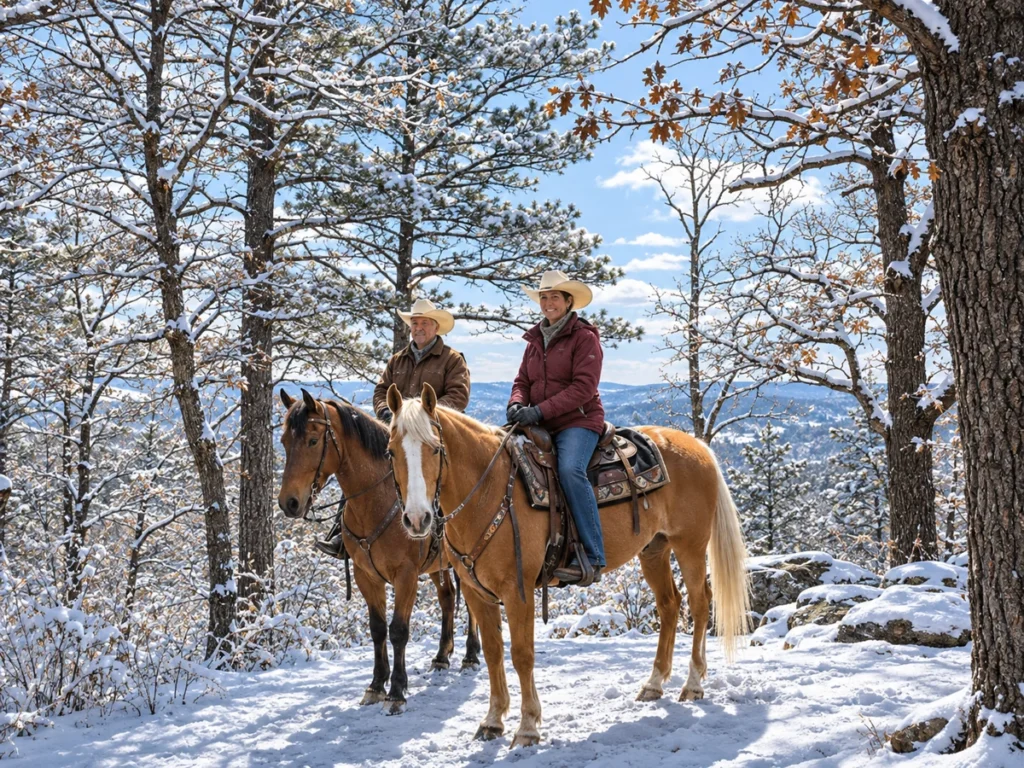
Winter trail riding in northern Illinois has a quiet kind of magic to it. The trails are empty, the woods are still, and a horse’s breath puffs out in the cold air like little clouds. But cold weather asks a little more of both horse and rider, and a bit of preparation goes a long way toward keeping those winter rides enjoyable.
Understanding how cold weather affects your horse, recognizing potentially dangerous conditions and preparing for winter trails can help keep both you and your horse comfortable throughout the season.
Featured image: A digitally reimagined winter version of our horseback wedding at 4-J Big Piney Horse Camp in the Missouri Ozarks.
When Is It Too Cold to Ride a Horse?
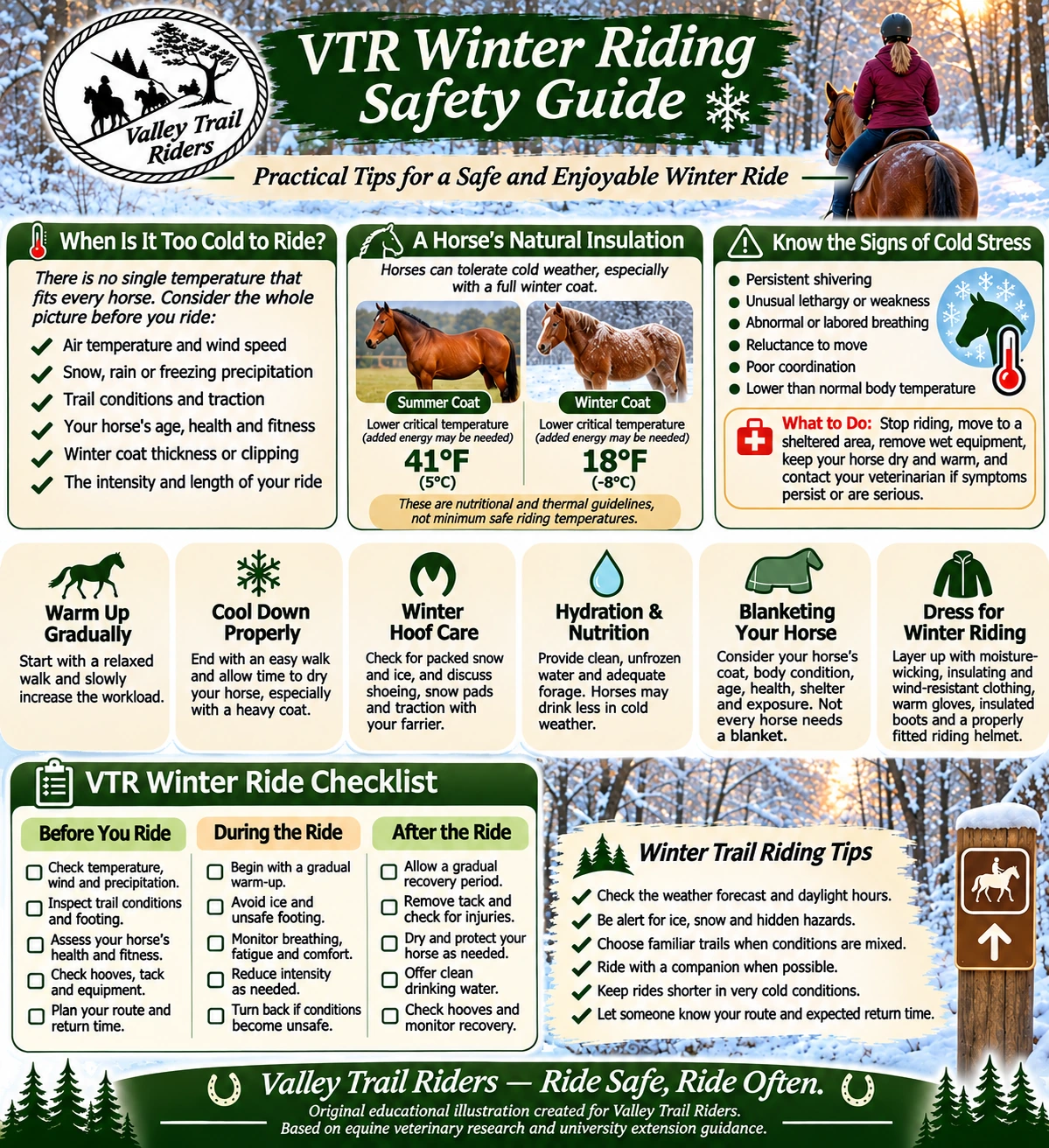
There is no single outdoor temperature that determines whether every horse can safely be ridden. Consider the entire riding environment rather than relying on temperature alone.
- Air temperature and wind speed.
- Snow, rain and freezing precipitation.
- Trail conditions and available traction.
- Your horse’s age, health and physical conditioning.
- Winter coat thickness and whether your horse is clipped.
- The intensity and duration of your planned ride.
A healthy, conditioned horse accustomed to northern Illinois winters may tolerate conditions that would be unsuitable for an older, clipped or less healthy horse. Use the assessment below as a planning aid, not a guarantee of safety.
VTR Winter Riding Assessment
Check conditions before heading out on the trail.
Educational planning aid, not a validated veterinary risk scale. No result guarantees safe riding. Temperature and wind prompts are conservative planning choices, not established equine safety limits. Consult your veterinarian for individual advice.How Cold Air Affects Your Horse’s Lungs
The upper airways normally warm and humidify inhaled air. During demanding exercise, increased breathing can reduce the effectiveness of this process.
A 2007 study of nine adult horses found that submaximal exercise while breathing air at 23°F (-5°C) altered airway immune responses for at least 48 hours. Other studies found changes in airway resistance and evidence of respiratory tissue injury after cold-air exercise.
These findings do not establish 23°F as a universal riding cutoff. They support reducing exercise intensity in cold conditions and taking extra precautions with horses that have respiratory conditions.
Understanding Your Horse’s Winter Coat
A winter coat helps insulate the horse. University of Minnesota Extension estimates lower critical temperatures of 41°F (5°C) for a summer coat and 18°F (approximately -8°C) for a winter coat. Below these estimates, additional dietary energy may be needed to maintain body warmth. These are not minimum safe riding temperatures.
Horses at Greater Risk During Cold Weather
Senior, young, underweight, clipped, unacclimated or ill horses may need additional precautions. Wet coats and wind can increase heat loss. Evaluate each horse individually and consult your veterinarian about health concerns.
Recognizing Signs of Cold Stress
Watch for persistent shivering, unusual lethargy, weakness, abnormal breathing, reluctance to move, poor coordination or unusually low body temperature. Coughing and reduced exercise tolerance may indicate respiratory difficulties.
Stop riding if your horse shows distress. Move to shelter, remove wet equipment, dry the horse and provide appropriate insulation. Contact your veterinarian promptly for suspected cold stress; severe weakness, collapse or difficulty breathing requires immediate veterinary assistance.
Warming Up Your Horse Before Riding
Start with relaxed walking and gradually increase the workload as appropriate. Give your horse time to prepare rather than asking for demanding movements immediately after leaving the barn.
Cooling Down After a Winter Ride
Finish with an easy walk and allow breathing to recover. Remove the saddle and check for perspiration. A breathable, moisture-wicking cooler can help prevent chilling while your horse dries. Replace a damp cooler with a dry one as necessary and avoid leaving a wet horse exposed to cold winds.
Winter Hoof Care and Trail Traction
Snow, frozen ground and hidden ice present additional challenges. Packed snow under hooves can interfere with balance and traction, while deep snow increases exertion. Inspect feet before and after riding. Discuss winter shoeing, snow pads and traction with your farrier. Avoid icy trails rather than assuming walking makes them safe.
Hydration and Nutrition During Winter
Provide regular access to clean, unfrozen drinking water. Reduced water intake can contribute to impaction colic. Monitor drinking, appetite and manure production, and consult your veterinarian about concerning changes. Properly installed heated buckets or tank heaters can help. Adequate forage and appropriate nutrition support the extra energy needed in cold weather.
Should You Blanket Your Horse?
Not every horse needs a winter blanket. Consider coat, body condition, age, health, available shelter, wind and precipitation. Clipped horses or those with limited insulation may need additional protection. Check beneath blankets regularly for rubbing, moisture and changes in body condition.
Dressing for Winter Trail Riding
Dress for the ride, not just the barn. Cold fingers and numb toes end rides early; comfortable hands and feet help maintain control.
- A moisture-wicking base layer.
- An insulating middle layer.
- A wind-resistant outer layer.
- Warm gloves that allow rein control.
- Insulated riding boots with appropriate heels and stirrup clearance.
- Warm socks.
- A properly fitted equestrian riding helmet.
Additional ear or head coverings must not interfere with helmet fit or effectiveness.
Planning a Safe Winter Trail Ride
Melting snow may refreeze, and shaded areas can remain icy. Check forecasts, daylight, trail closures and footing before leaving. Choose familiar trails, carry a charged phone, tell someone your route and expected return time, and consider riding with a companion. Shorter rides are still good rides.
Winter Riding Safety Checklist
Before riding
- Check temperature, wind and precipitation.
- Inspect trail conditions and footing.
- Assess your horse’s health and fitness.
- Check hooves, saddle and equipment.
- Plan your route and return time.
During the ride
- Begin with a gradual walking warm-up.
- Avoid ice and dangerous footing.
- Monitor breathing, fatigue and comfort.
- Reduce intensity as conditions require.
- Turn back if conditions become unsafe.
After riding
- Allow a gradual recovery period.
- Remove tack and inspect for injuries.
- Dry and protect your horse as needed.
- Offer clean drinking water.
- Check hooves and monitor recovery.
Enjoy the Quiet Season
Some of the best rides of the year happen on a crisp, clear winter morning when the whole world feels like it belongs to just you and your horse. Bundle up, check the footing and make decisions based on your horse’s comfort and safety. The trails will be waiting — and so will spring.
Valley Trail Riders — Ride Safe, Ride Often.
More Horseback Riding and Camping Resources
- When Is It Too Hot to Ride a Horse?
- How to Tell If Your Horse’s Saddle Fits
- Horse Camping in Illinois
- Equestrian Destinations & Reviews
- 4-J Big Piney Horse Camp
Educational Sources and Further Reading
- University of Minnesota Extension — Caring for Your Horse in the Winter
- Davis et al. (2002) — Airway cooling and mucosal injury during cold weather exercise.
- Davis et al. (2006) — Cold air-induced late-phase bronchoconstriction in horses.
- Davis et al. (2007) — Influx of neutrophils and persistence of cytokine expression in airways of horses after performing exercise while breathing cold air.
- Equestrian Canada — Extreme Weather Guidelines
This article is intended for educational purposes and does not replace professional veterinary advice.