
How Do I Keep My Horse’s Hooves Healthy in Winter?
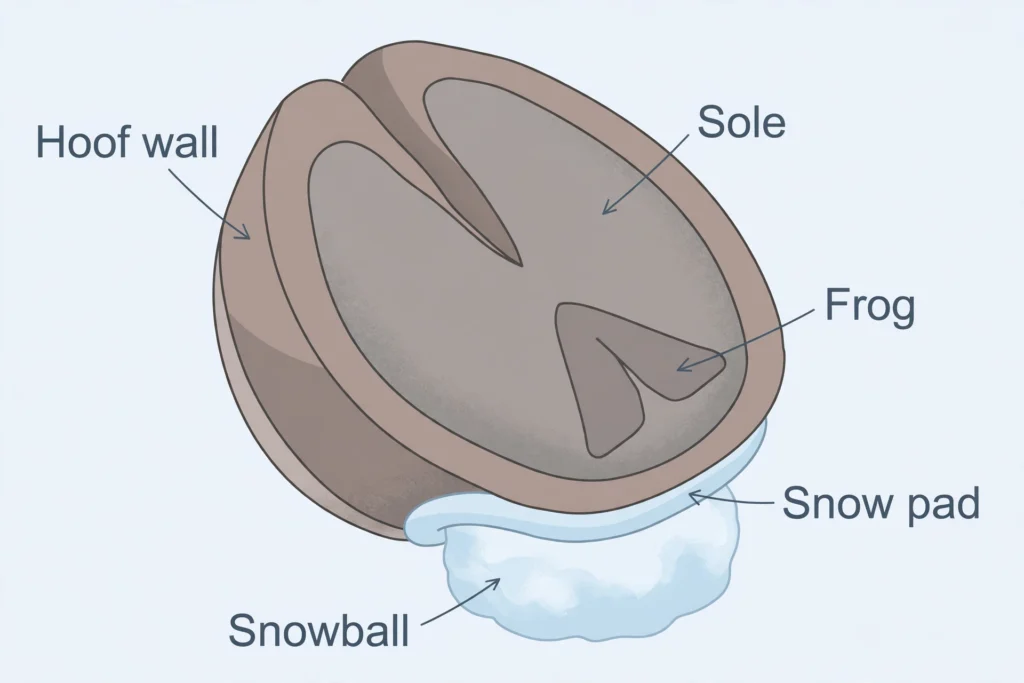
Pick up your horse’s hoof on a January morning and you’ll find winter written all over it: mud caked into the frog, a snowball packed tight as a stone under the sole, maybe a crack opening along the wall that wasn’t there in October. Hooves take a beating in the cold months, and they do it quietly — right up until your horse comes up sore on a frozen trail.
Winter is hard on feet in ways summer never is. The ground swings from mud to frozen ruts and back again, sometimes in a single day. Hooves grow more slowly in the cold, so damage done now takes longer to grow out. And the wet, airless footing of a muddy paddock is exactly where thrush and white line disease like to set up shop. The good news is that most winter hoof trouble is preventable, and the prevention is mostly a daily habit, not a big project.
Why Winter Is Tough on Hooves
A hoof that sits in a muddy paddock all night and then stands in a dry stall is going through a wet-dry swing every single day. The outer surface swells and shrinks, swells and shrinks, and that’s when old cracks open up, nail holes loosen, and the white line starts to separate. A sole that has been soaking in slop all morning and then hits frozen, rutted ground in the afternoon is a recipe for stone bruises and the abscesses that pop up in January.
Meanwhile the hoof itself is growing more slowly. Extension Horses guidance notes that hooves generally grow more slowly in winter, and a trim interval of every six to twelve weeks may suffice — but that also means the damage you let in this winter is the hoof your horse walks on well into next summer. It takes roughly a year to grow a whole new hoof wall from the coronet band to the ground.
Snowballs and Ice Balls
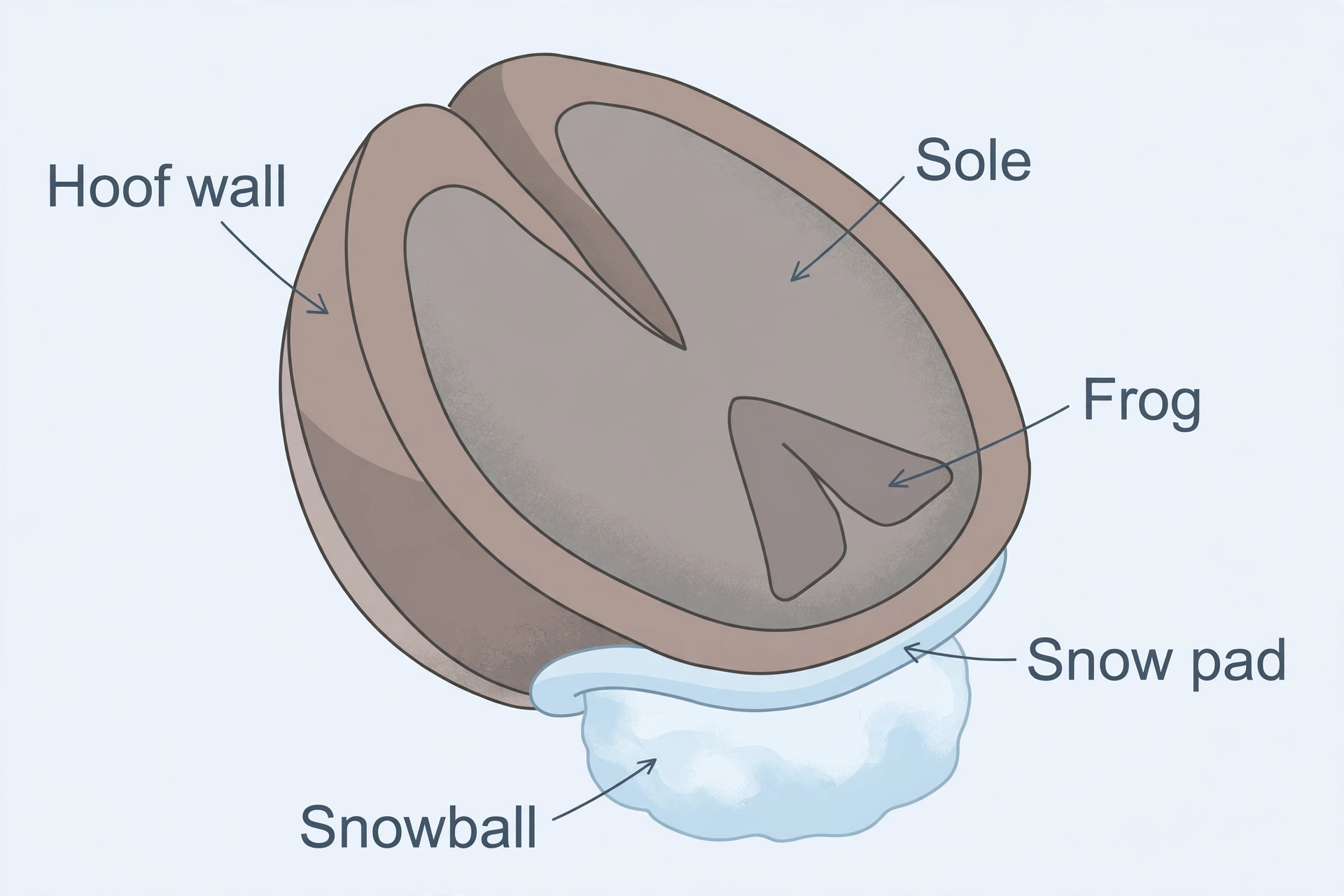
The most obvious winter hoof problem is also the most dangerous one to ignore. Snow packs into the sole and freezes into a hard ball, and your horse ends up walking on stilts. That strains tendons and joints and turns every step into a slip risk. Shod horses get it worst, because the shoe rim traps the snow.
Check for snowballs every time you bring your horse in from snow, and knock them out with a hoof pick before they freeze solid. A little petroleum jelly or cooking spray on the sole before turnout can help snow slide out instead of packing in, and it’s worth asking your farrier about snow pads — pads placed under the shoe that keep snow and ice from building up in the first place.
Thrush and White Line Disease
Thrush is a foul-smelling black discharge, usually found around the frog, that thrives in wet, soiled conditions. In its early stages it affects only surface tissue and doesn’t cause lameness, but left alone it can invade sensitive tissue and lead to real lameness. White line disease is a progressive separation of the hoof wall that takes hold when the wall is already weakened, and treating it can mean removing infected wall — which leaves the foot more vulnerable still.
Both of them are mostly preventable the same way: dry footing where you can manage it, a clean stall, and picking feet daily so packed mud doesn’t seal out the air and give bacteria a place to work. If you smell thrush or see black discharge in the frog, talk with your veterinarian about safe treatment options, and keep up with regular trimming of the foot and frog.
Shod or Barefoot in Winter?
This is a question for your farrier, not a rule of thumb, but a few things are worth knowing before that conversation. Horses that are barefoot through the winter usually slip less and have fewer problems with snow packing into the hoof. Horses that stay shod may need snow pads under the shoes and small cogs, borium, or nails at the heels for traction on ice.
Whatever you decide, don’t skip farrier appointments just because you’re riding less. Keep the regular schedule going through the winter, even if the interval stretches a bit with the slower growth. A horse coming out of winter with overgrown, unbalanced feet is a horse headed for a sore spring.
The Daily Routine That Works
Winter hoof care is mostly a five-minute habit, done every day:
– Pick all four feet daily, twice when it’s wet. Clean out the grooves alongside the frog and the central cleft, not just the middle.
– Look and smell as you pick. A foul smell, black discharge, or a soft spot in the frog is thrush until proven otherwise.
– Check for cracks, chips, and loose shoes, and feel for heat in the hoof wall — heat plus a short stride can mean a brewing abscess.
– After a ride on frozen ground, check for bruising and pick out any packed snow or ice before it freezes harder.
– Keep the stall and the area around the water trough as dry as you can. Dry footing is the single best thrush prevention there is.
When to Call Your Farrier or Veterinarian
Call your farrier if a shoe is loose, twisted, or lost, if a crack is spreading, or if the hoof wall is separating. Call your veterinarian if your horse is lame, if there’s heat and a strong pulse in the foot, if thrush isn’t clearing up with basic care, or if you suspect an abscess. A sole abscess can go from a slightly short stride to a three-legged horse in a day, and it needs professional care.
Your Winter Hoof Checklist
Keep this in your head through the cold months:
1. Pick feet every day, twice when it’s wet
2. Knock out snowballs before they freeze solid
3. Watch for thrush — smell the frog, look for black discharge
4. Keep stalls and turnout as dry as you can
5. Keep farrier appointments on the calendar, even when you’re riding less
6. Ask your farrier about snow pads and traction before the ground freezes hard
A horse’s hooves carry him over every mile of trail we ask for. Five minutes a day with a hoof pick is a small price for feet that will carry him sound into spring.
See you on the trail,
Valley Trail Riders
P.S. Winter hydration and winter hooves go together — a horse that isn’t drinking enough is a horse headed for trouble in more ways than one. Our winter hydration post has the water side of the story: “Is My Horse Drinking Enough Water in Winter?” at valleytrailriders.club/blog/is-my-horse-drinking-enough-water-in-winter/
Sources and Further Reading
– “Basic Horse Hoof Care,” Extension Horses (horses.extension.org) — https://horses.extension.org/basic-horse-hoof-care/
– “Winter hoof care for horses,” Colorado State University Veterinary Health System — https://csuveterinaryhealth.org/winter-hoof-care-for-horses/
– “Winter Care Tips for Horse Owners,” University of Delaware Extension — https://sites.udel.edu/canr-animalscience/2019/01/10/winter-care-tips-for-horse-owners/
Note: This post is general information for trail riders, not veterinary advice. If your horse is lame or shows signs of a hoof infection, consult your veterinarian or farrier.
Discover more from Valley Trail Riders
Subscribe to get the latest posts sent to your email.